
Spinal Decompression After Care
Supporting your progress
Your treatment doesn’t stop when you leave the clinic. The right movement between sessions can help maintain mobility, build tolerance and support your progress throughout your treatment plan.
Just completed your first session?
What you may notice after treatment
Like returning to exercise after some time away, your body may need a little time to adjust to a new type of movement and loading.
After your first few sessions, you may notice:
✓ Mild soreness or stiffness
✓ Increased awareness of the treated area
✓ Temporary changes in how your spine feels or moves
✓ Settles within 24 – 48 hours
Early on, it’s normal to notice some changes as your body begins to adapt. These responses should generally be mild and settle as your body adjusts.
Please contact us if:
✕ Your pain becomes sharp or significantly worse
✕ Your symptoms noticeably escalate
✕ New or concerning symptoms develop
✕ Symptoms are not settling as expecte
Your treatment progresses over time
Spinal decompression is delivered progressively rather than applying the same level of treatment from day one.Your clinician may adjust factors such as positioning, movement and treatment intensity according to how you respond.
The aim is to gradually:
➜ Improve spinal movement
➜ Build tolerance to everyday loading
➜ Reduce sensitivity and stiffness
➜ Support your return to normal activity
Progress comes from the right amount of challenge — not too little, and not too much.
“Recovery takes time.
Adaptation happens over weeks, not days.
Consistency is key. ”
After Your Treatment - Ways to Support your Progress
This guide is designed to support your progress during your spinal decompression treatment plan. The exercises and daily habits in this guide act as ongoing ‘spinal hygiene’, supporting mobility, stability, and long-term function. Together, treatment & movement work to improve how your spine moves and responds to everyday activities.
Keep Moving
Avoid staying in one position for long periods. Move regularly during your day.
Every 30–60 minutes
➜ Take a short walk
➜ Change position
➜ Complete mobility exercises
Walking
Aim for approx. 10–20 minutes daily
or as recommended by your clinician.
This can be broken into shorter walks if that feels more comfortable.
Stay Hydrated
Discs are approx. 70–90% water.
Hydration = function.
Aim for approx. 30 to 35 ml per kg
of body weight daily.
Eg. 70 kg = Approx. 2.5 litres daily
Complete your after-care Mobility exercises
The exercises below are designed to help maintain movement between treatments and build mobility and control around the area being treated.
Choose the exercises recommended by your clinician.
Your exercises should feel controlled and comfortable. Do not force through sharp or increasing pain.
Cervical (Neck) After-Care Exercises
Chin Tuck
4 × 20-second holds (tucked position)
Gently tuck your chin (like making a double chin).
Hold without lifting your head.
Rest and repeat
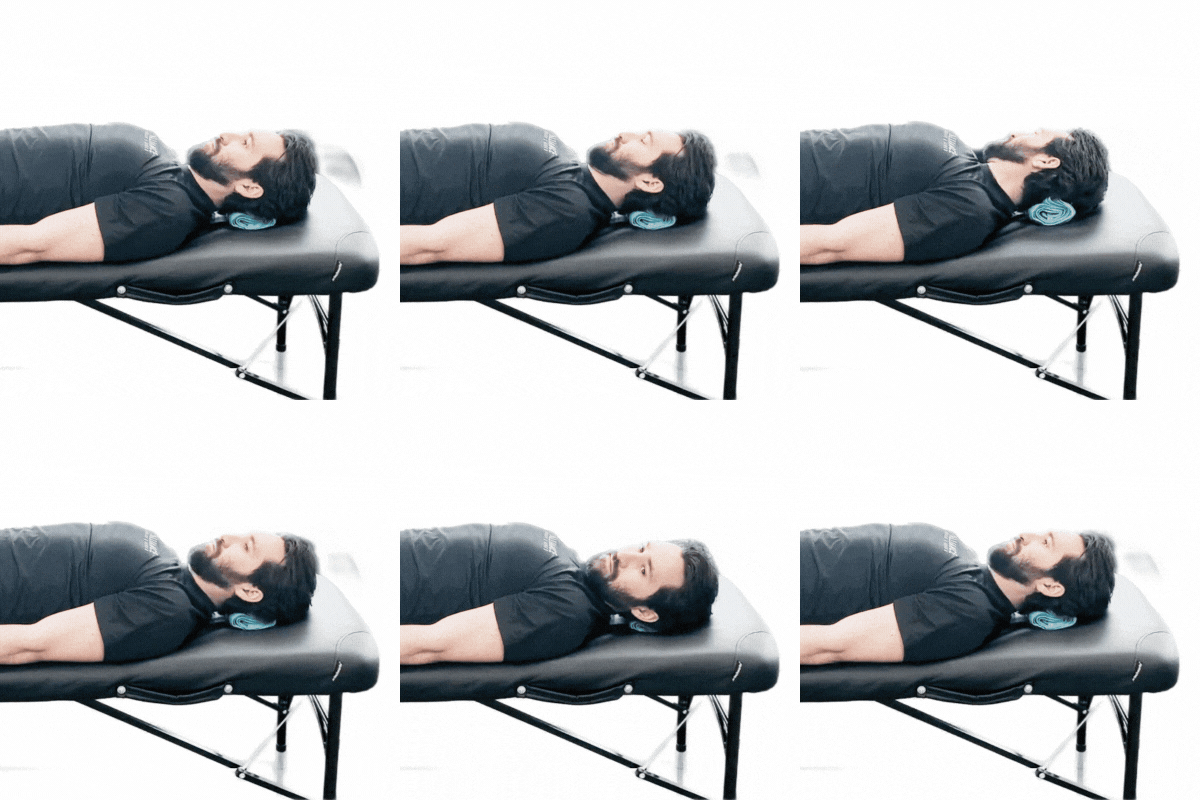
Chin Tuck + Rotation
15 x controlled rotations
Maintain a gentle chin tuck (as per the previous exercise).
Slowly rotate your head side to side.
Keep the tuck throughout.
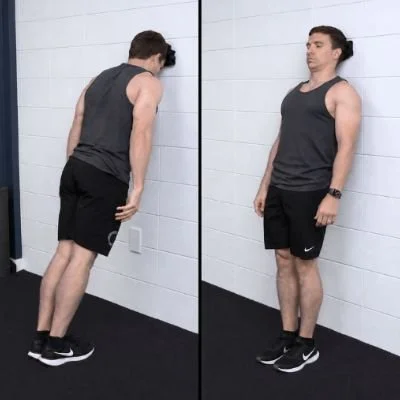
Isometrics (Wall Plank)
4 x 30 sec hold / 30 sec rest (Both ways)
Standing place towel at forehead height.
Take a step away from wall.
Keep hands by sides. Hold, rest, repeat.
Want some extra guidance?
Follow this guided routine to support neck mobility.
Thoracic (Upper Back) After Care Exercises
Cat-Cow
10 repetitions each direction
Move slowly between rounding your spine and gently opening through your chest.
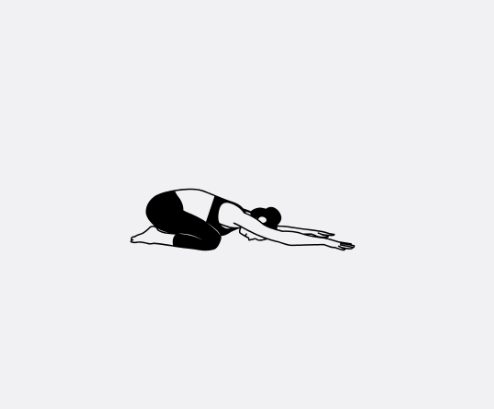
Child’s Pose
15 repetitions
Sit your hips back towards your heels and reach forward through your arms.
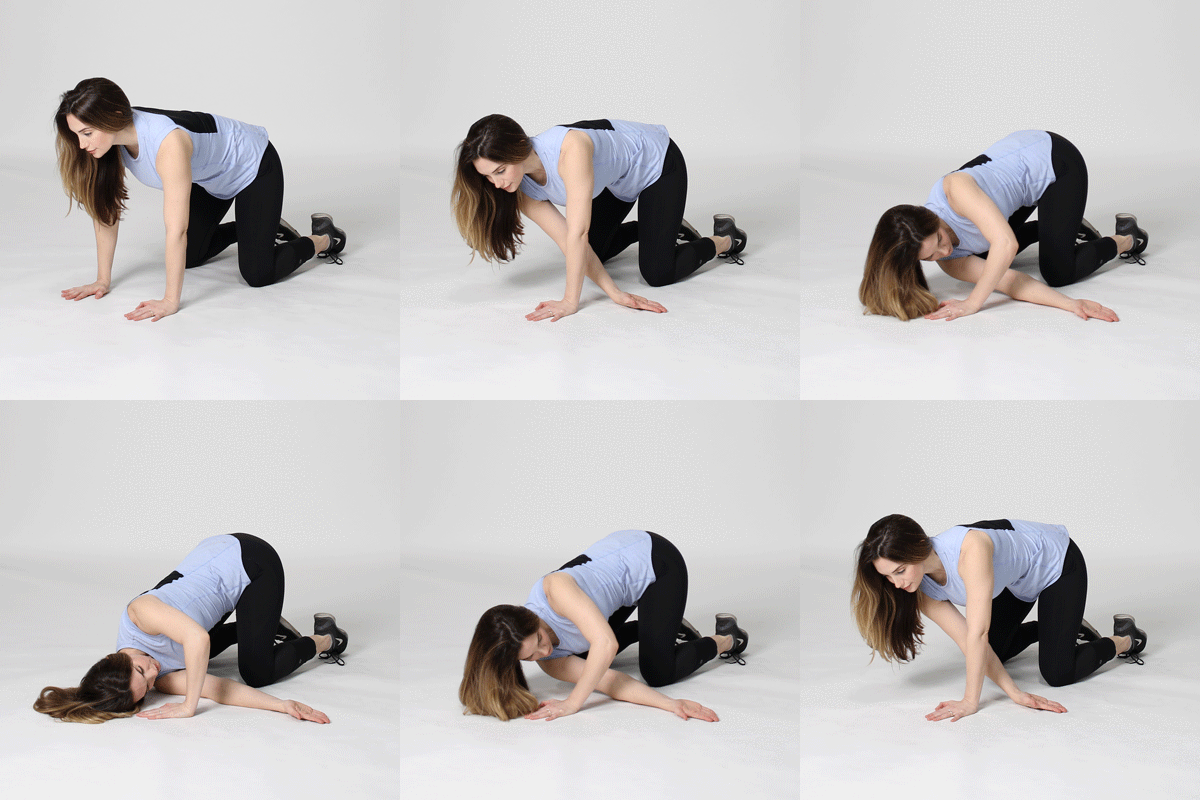
Thread the Needle
12 slow rotations each side
From hands and knees, rotate through your upper back as one arm reaches underneath your body.
Want some extra guidance?
Follow this guided routine to support upper back mobility.
Additional guided routine to support Upper Back Mobility (VIDEO)
Lumbar (Lower Back)
Cat-Cow
10 repetitions each direction
Move gently between spinal flexion and extension.
Start on hands and knees
Arch your back up (cat), then –
Slowly drop your belly (cow)
Move smoothly between both positions
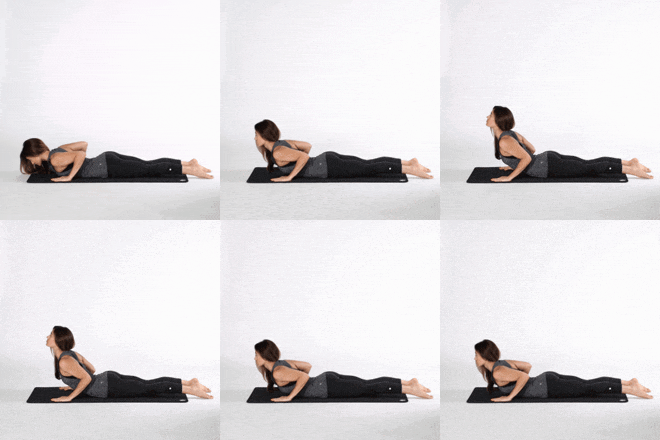
Cobra Press-Up
4 x 30 sec movement / 30 sec rest
Lie on your stomach, hands under shoulders
To Press up – Squeeze your glutes and gently press your chest up, keeping hips on the floor
Only go as far as comfortable – no forcing
Return to start and repeat
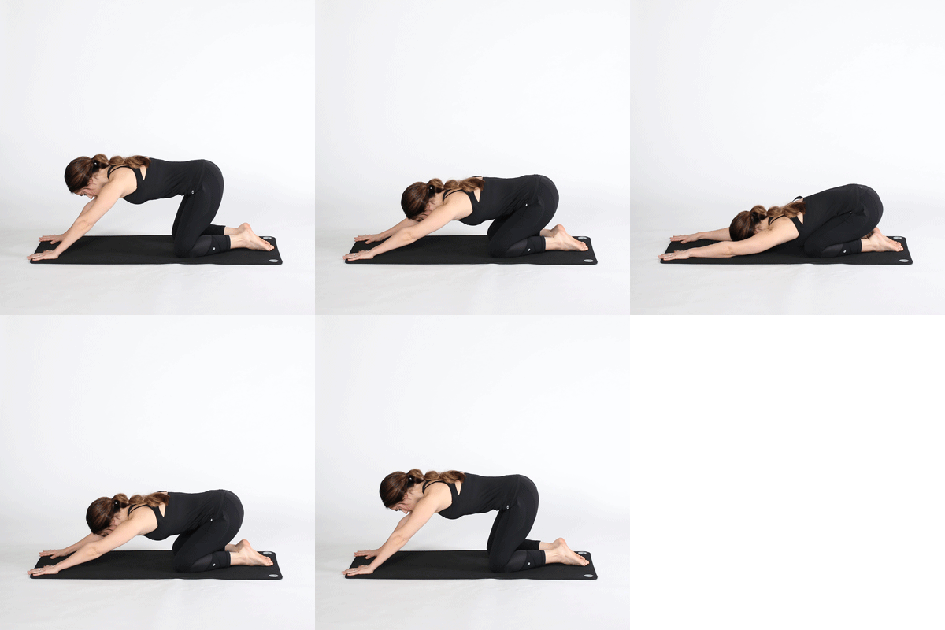
Child’s Pose
15 repetitions
Start on hands and knees
Sit your hips back toward your heels
Reach your arms forward and stretch
Return to start and repeat
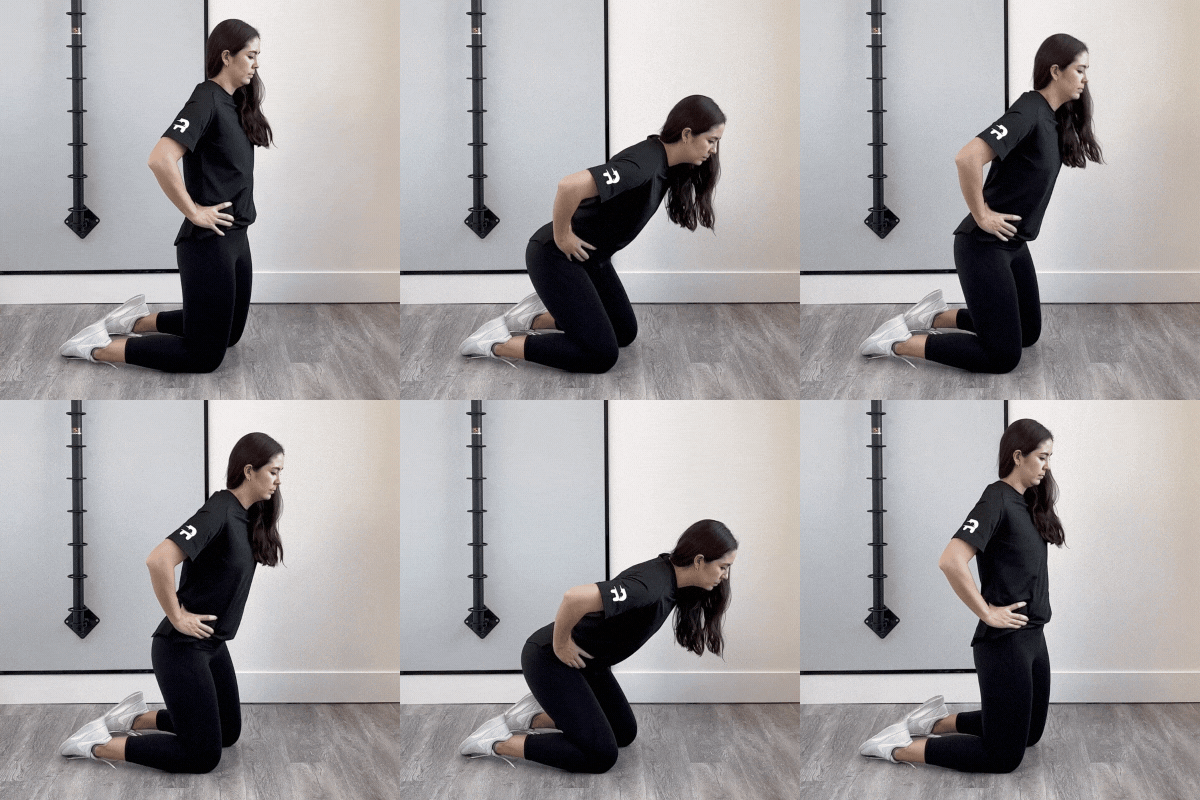
Tall Kneeling Hip Hinge
2 minutes
Start in seated kneeling position
Kneel upright – At the top, squeeze your glutes and gently arch back.
Return to seated – slowly hinge your hips back, keeping your back straight
Return to start and repeat
Additional guided routine to support Lower Back & Hip Mobility (VIDEO)

Questions between appointments?
If something does not feel right after treatment, or you are unsure which exercises you should be completing, please get in touch with the clinic on 0466 074 208.